
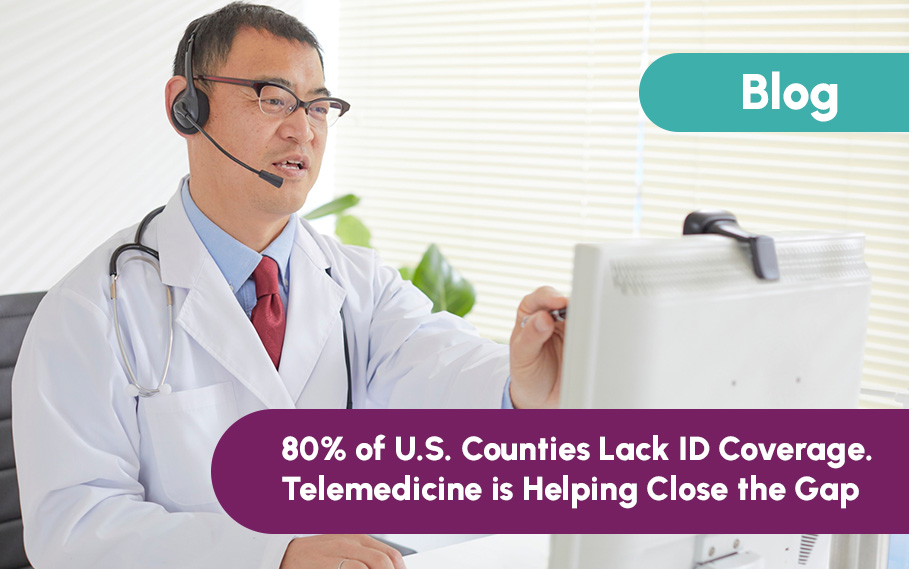

The infectious diseases workforce is shrinking while demand for specialized care continues to grow. Eighty percent of U.S. counties lack access to an infectious diseases physician, and fewer than 10% of U.S. acute care hospitals have on-site ID physician support, with rural communities facing the greatest gaps in access. The impact is significant: delayed diagnoses, inappropriate antibiotic use, avoidable patient transfers, and poorer outcomes.
A recent article published on the Infectious Diseases Society of America’s Science Speaks blog by ID Connect physician Dr. Linda Nabha outlines why telemedicine is no longer just an alternative to traditional ID care. It is becoming an essential part of how hospitals deliver it.
The Evidence Behind Tele-ID
The value of ID consultation is well established. Studies consistently link ID physician involvement to lower mortality in serious infections, including bloodstream infections, Staphylococcus aureus bacteremia, candidemia, and enterococcal infections. ID specialists also strengthen antimicrobial stewardship, cutting unnecessary antibiotic use and improving hospital bottom lines. ID Connect helped one small health system save $1M annually with virtual antimicrobial stewardship.
Tele-ID gives hospitals without on-site specialists access to this expertise remotely. In a recently published study in Open Forum Infectious Diseases, daily tele-ID care reduced hospital length of stay by 1.6 days and cut IV antibiotic discharge rates by a third — even in sicker patients — compared to periodic in-person ID coverage.

Why This Matters Now
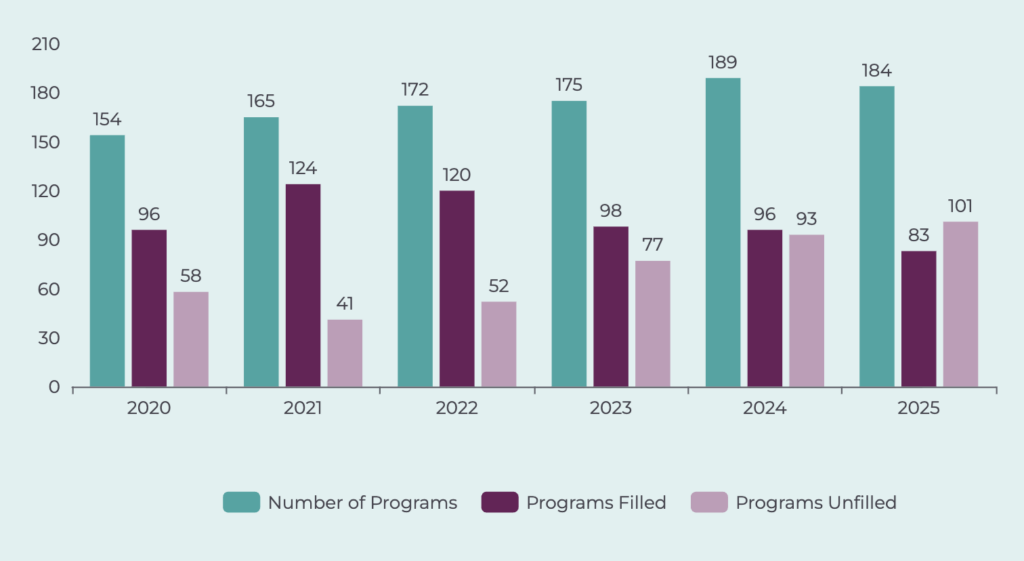
The need for scalable ID care models continues to grow. In 2025, more than half of adult infectious disease fellowship programs went unfilled. This indicates fewer new ID physicians entering the field, raising concerns for the future of ID care capacity.
As the shortage of ID physicians continues, telemedicine remains one of the most effective ways to expand access to specialized care in underserved communities.
ID Fellowship Match Fill Rate and Program Trends (2020-2025)
At ID Connect, we help hospitals extend access to experienced ID physicians, strengthen antibiotic stewardship efforts, support bedside clinical teams, and improve patient care in communities that otherwise may not have access to ID expertise.
If your hospital or health system is feeling the strain of the ID physician shortage, contact us today to learn how tele-ID can help.
This post highlights key findings from Dr. Linda Nabha’s March 2026 article published on the IDSA Science Speaks blog. Dr. Nabha is an infectious diseases physician at ID Connect.
You might also like…
Infectious Disease Connect Brings Tele-ID Research and Education to IDWeek 2026

Andrea Carlo Anglero, M.D., Presents at AMPRO 2026 Convention

Putting a Number on the Curbside: ID Connect-Led Study Gets IDSA Spotlight